
Living Textures
Living Textures
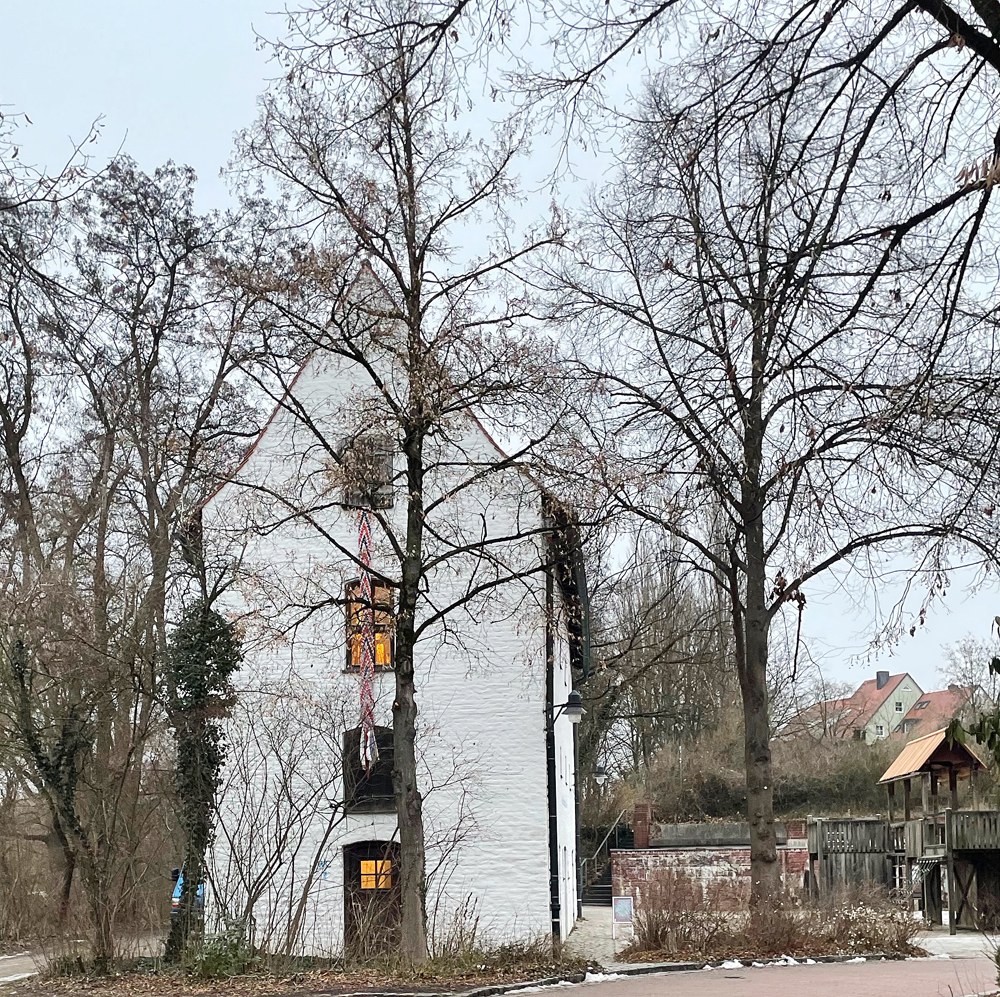
The exhibition and interaction took place at Neue Galerie Landshut, Januar 2026
“Living textures” constitutes a “Gesamtkunstwerk”—a total work of art.
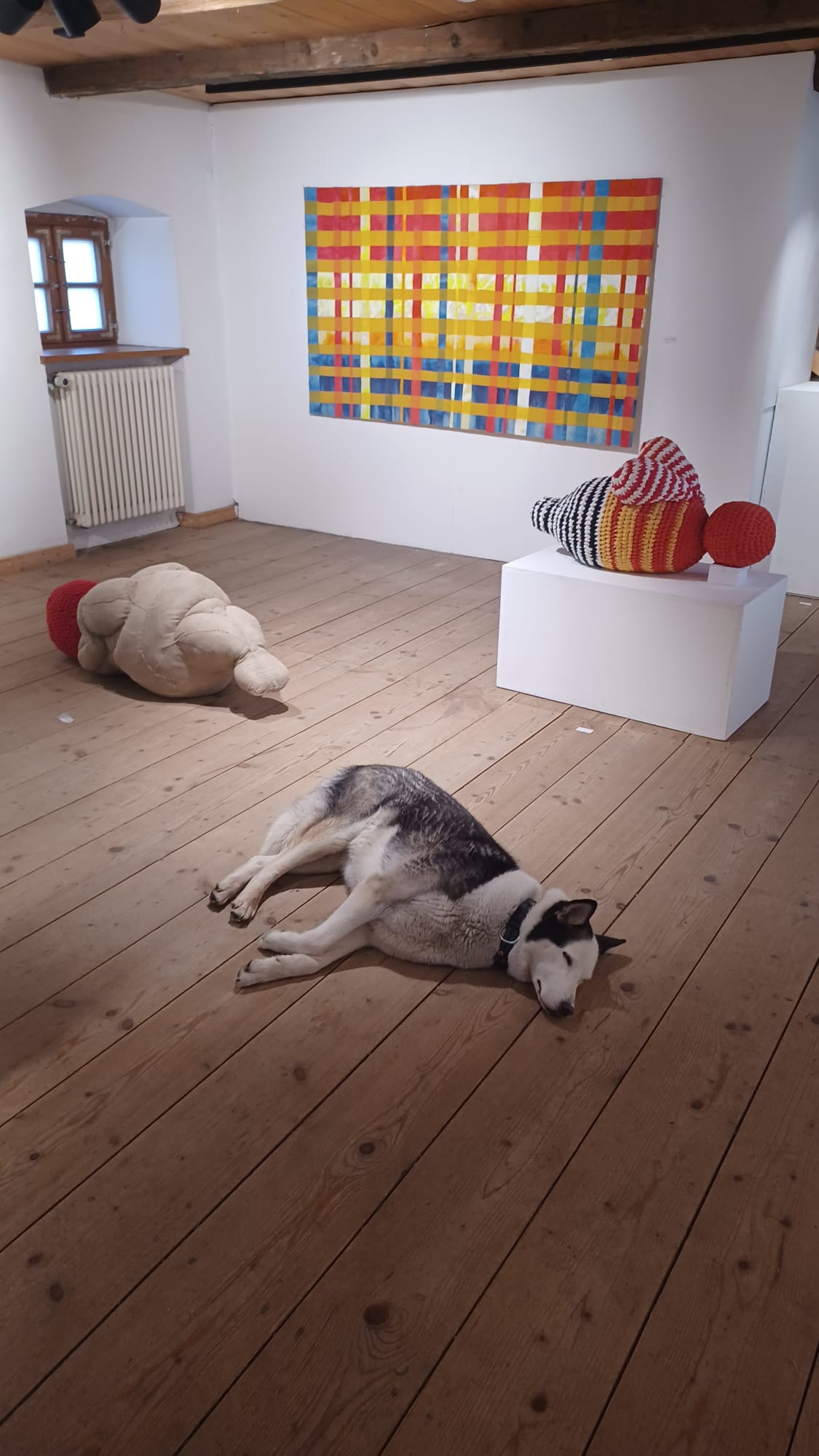
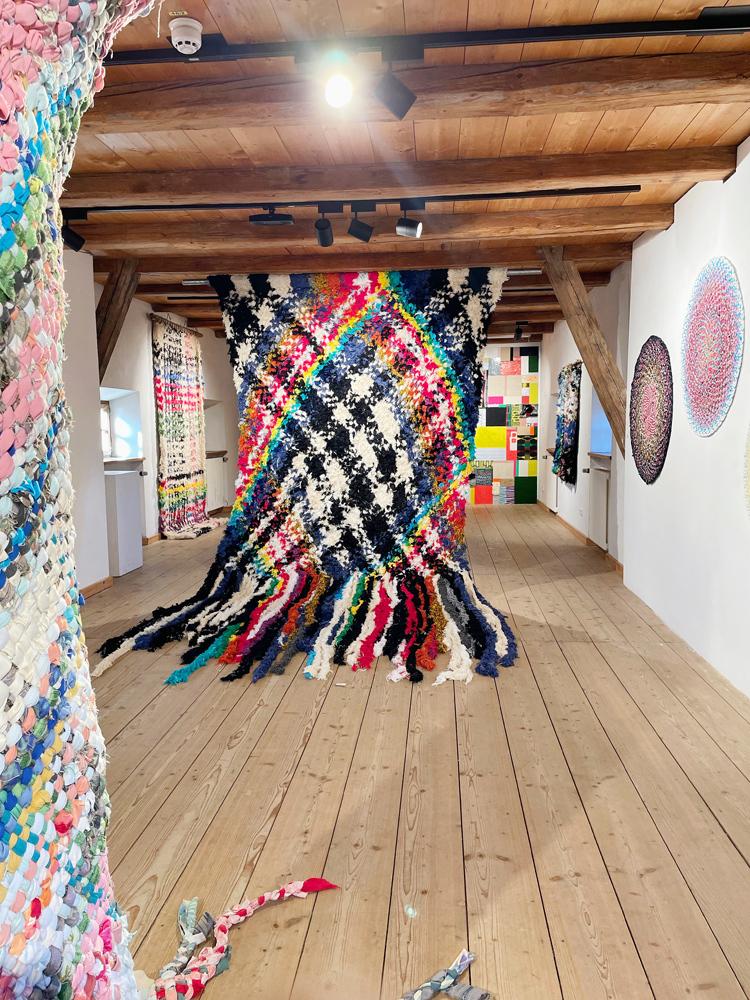
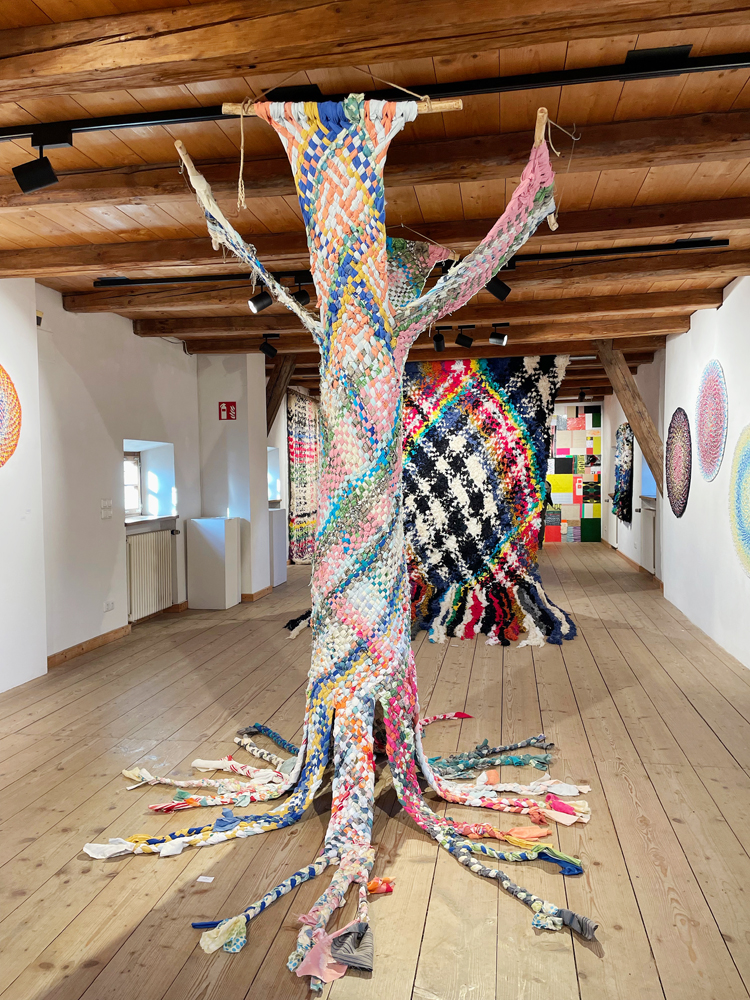
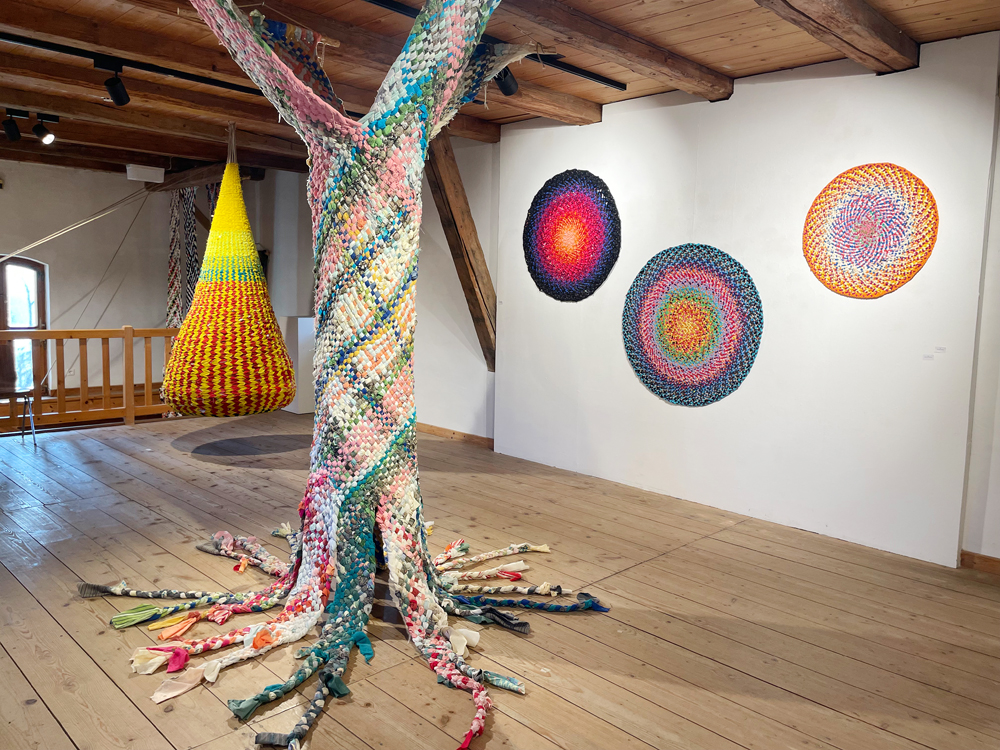
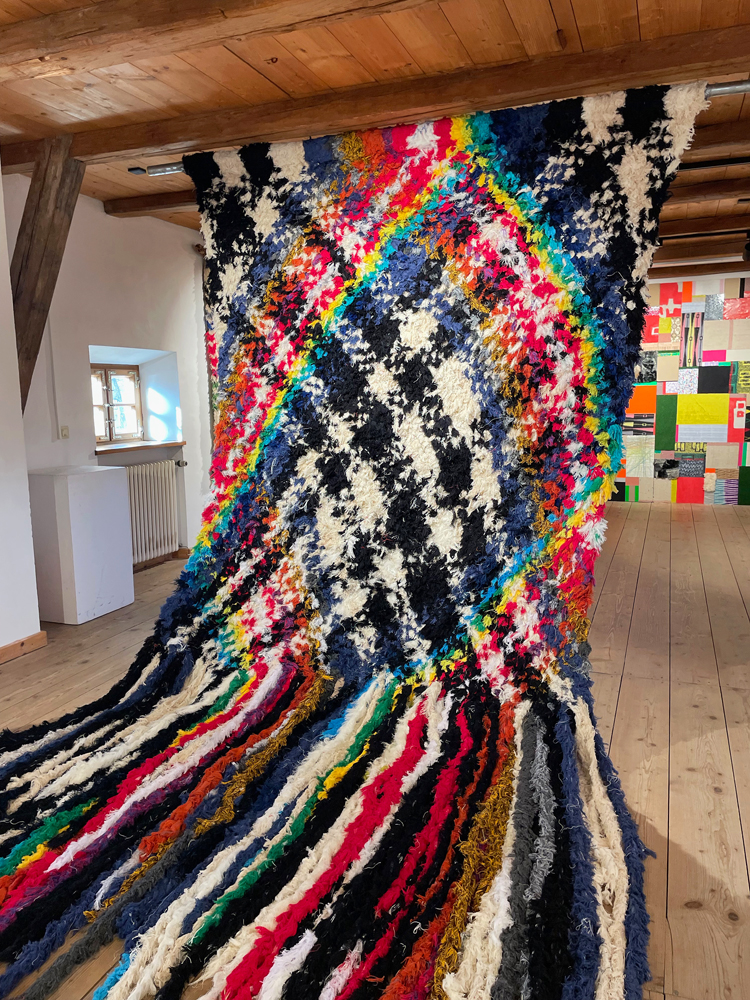
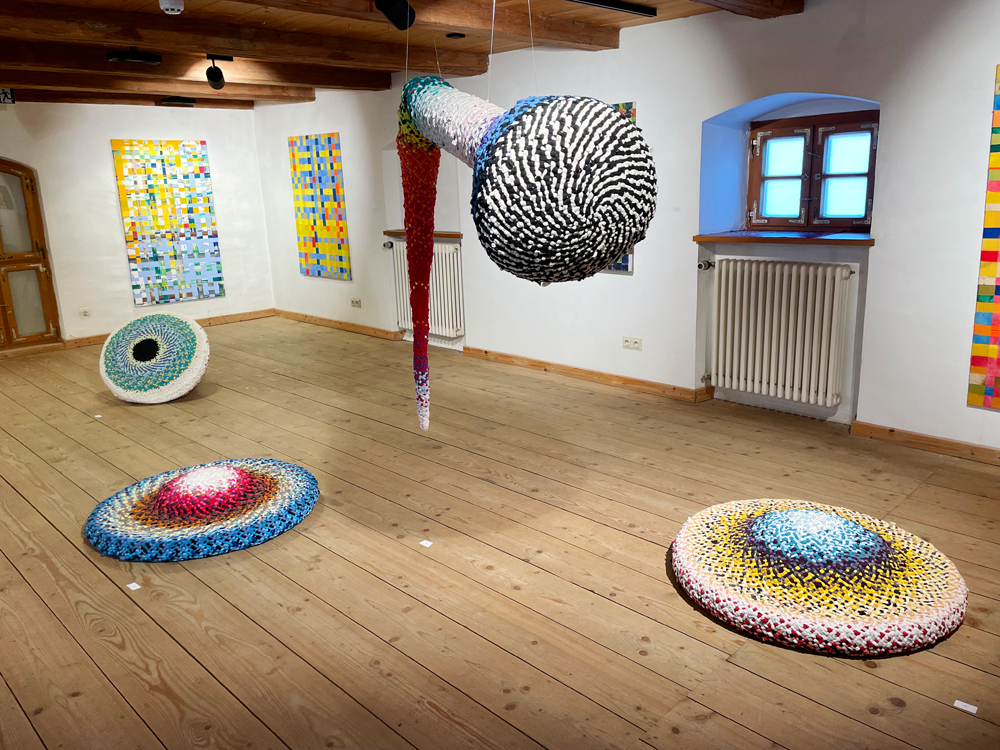
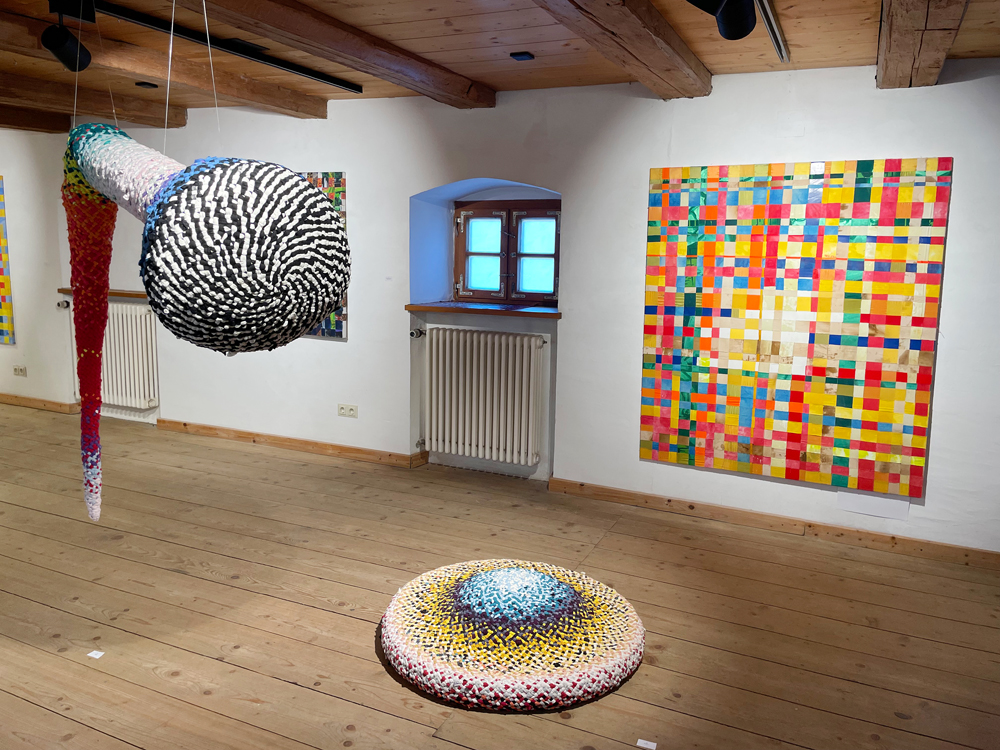
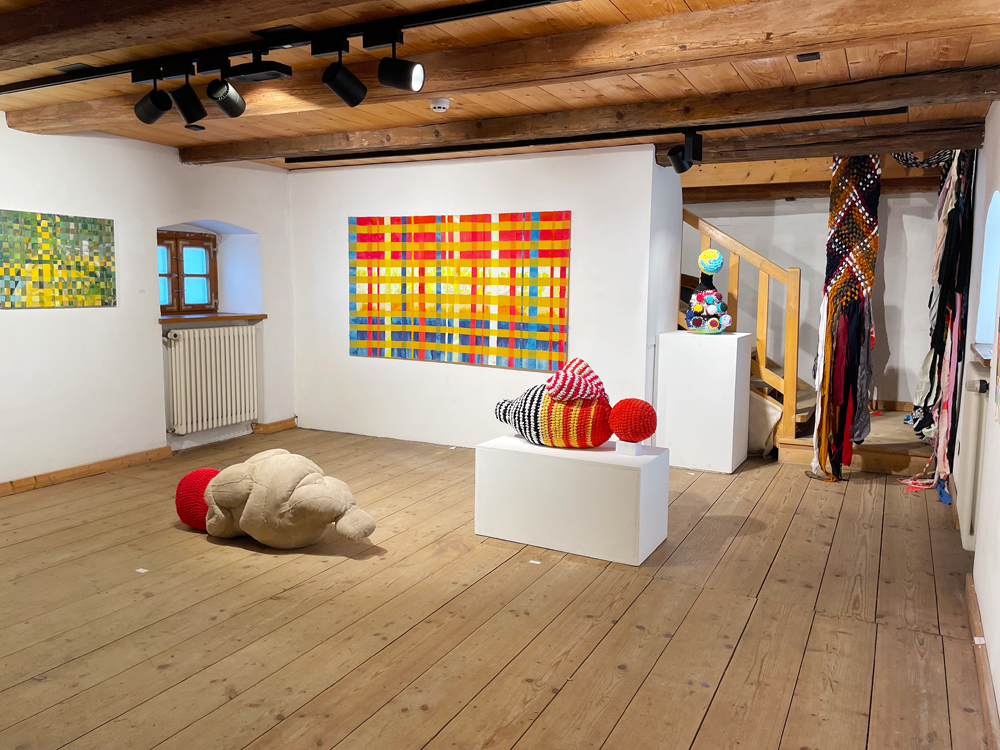
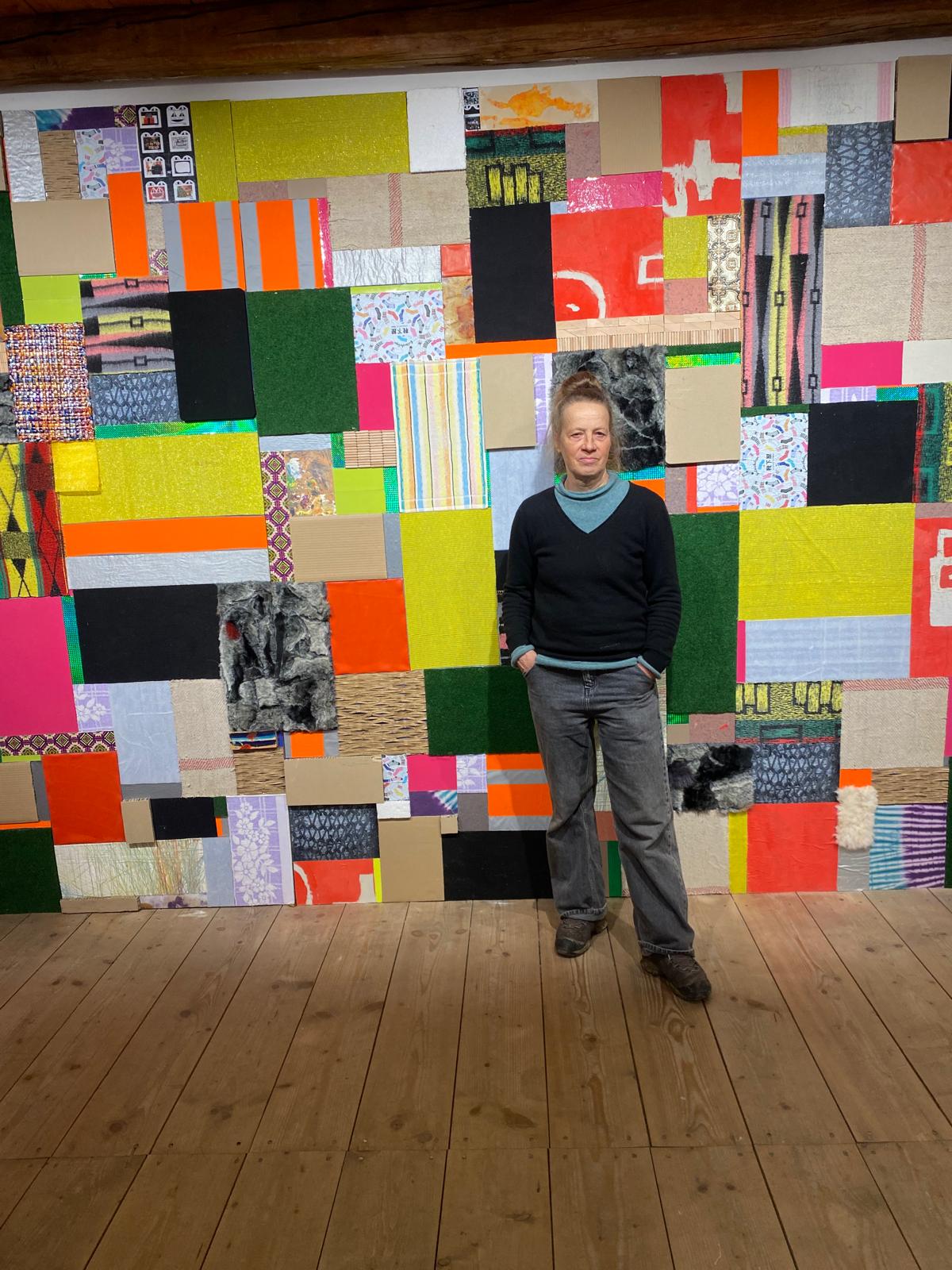
The woven images on the first floor envelop the visitor completely, causing the fabric of the individual pieces to merge into a spatial garment or a textile dwelling. The medium-format objects—ranging from figurative to abstract, from plumply stuffed to soft—present themselves to the viewer, practically begging to be touched. A sense of holistic well-being sets in; outside, it is bitterly cold, yet the rooms are well-heated, and the textile objects feel like cozy nooks. Huge, colorful friendship bracelets beckon visitors to the second floor, where large-format objects—woven and braided from discarded clothing—await them. Wall hangings trail their shaggy fringes down to the floor and beyond, their soft, tactile strands brushing against those passing by. Each piece is created using a distinct primary technique; none displays the mechanical precision of machine production. At the far end of the room, one stands before a wall-spanning installation composed of hundreds of different textures and materials—elements that have all played a role in Doro Seror’s artistic life and have here been assembled into a mosaic. The entire exhibition feels like a specially curated home. Visitors are invited to contribute to this atmosphere themselves by experimenting with braiding techniques—using strips of discarded clothing—on sticks suspended in mid-air.
“Living textures” constitutes a “Gesamtkunstwerk”—a total work of art.
The woven images on the first floor envelop the visitor completely, causing the fabric of the individual pieces to merge into a spatial garment or a textile dwelling. The medium-format objects—ranging from figurative to abstract, from plumply stuffed to soft—present themselves to the viewer, practically begging to be touched. A sense of holistic well-being sets in; outside, it is bitterly cold, yet the rooms are well-heated, and the textile objects feel like cozy nooks. Huge, colorful friendship bracelets beckon visitors to the second floor, where large-format objects—woven and braided from discarded clothing—await them. Wall hangings trail their shaggy fringes down to the floor and beyond, their soft, tactile strands brushing against those passing by. Each piece is created using a distinct primary technique; none displays the mechanical precision of machine production. At the far end of the room, one stands before a wall-spanning installation composed of hundreds of different textures and materials—elements that have all played a role in Doro Seror’s artistic life and have here been assembled into a mosaic. The entire exhibition feels like a specially curated home. Visitors are invited to contribute to this atmosphere themselves by experimenting with braiding techniques—using strips of discarded clothing—on sticks suspended in mid-air.